Training guide
How to plan a retriever training setup
Updated · 5 min read · By the FieldMarx team
The short answer
To plan a retriever training setup, check the wind, set the mat, then place each mark and its gunner so the dog can see the throw. Add any blinds on lines that stay clear of the marks' fall areas. Check the yardage to every bird before you head out, and record how each retrieve went so you can review progress over time.
Key terms
- Mat (the line)
- Where the handler and dog start. Distances and angles for the whole setup are measured from here.
- Mark
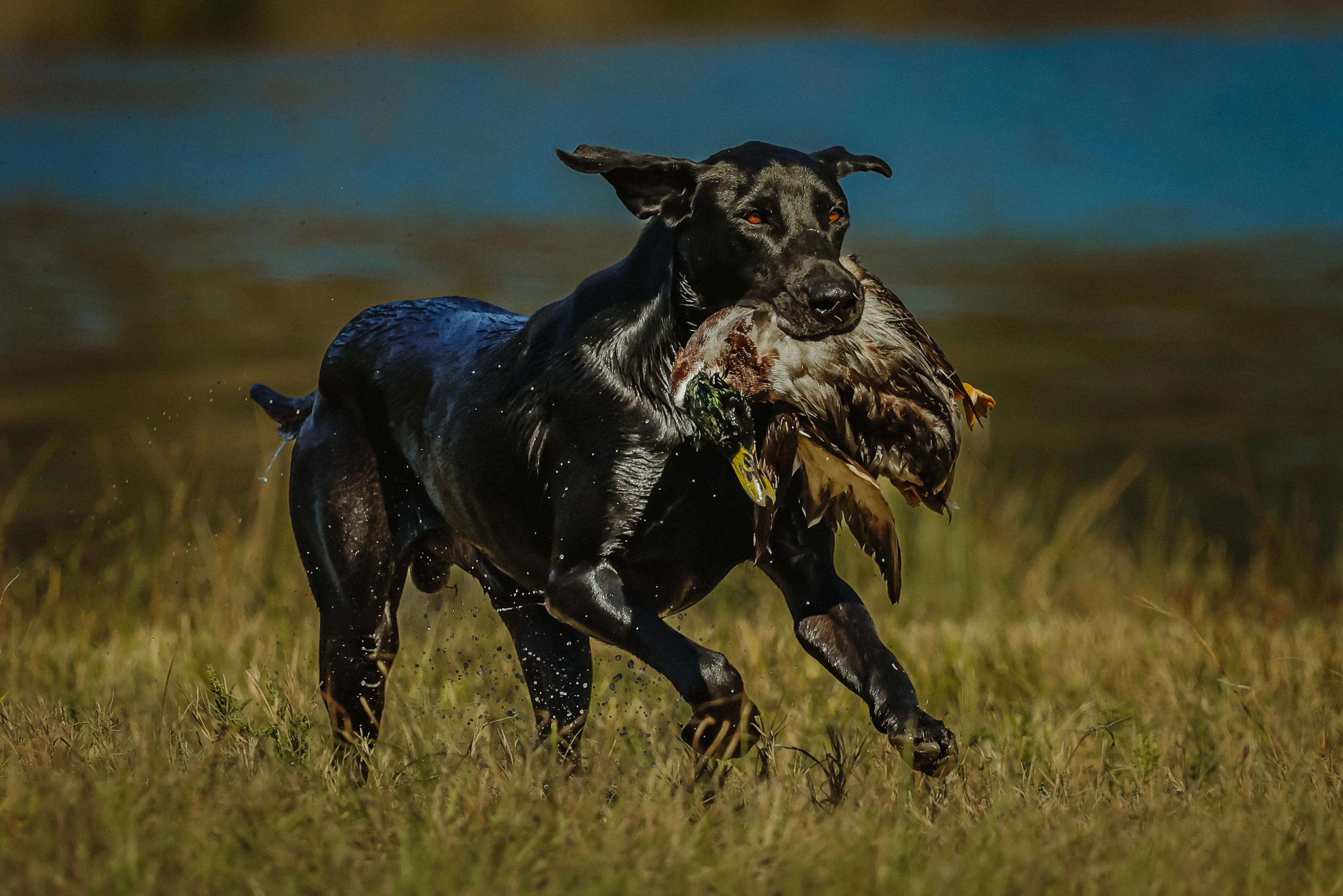
- A bird (or bumper) the dog watches fall, then retrieves from memory. A double is two marks, and a triple is three.
- Blind
- A bird the dog did not see fall. The handler directs the dog to it with whistle and casts.
- Gunner (thrower)
- The helper who throws the bird for a mark, usually stationed off to one side of the fall.
- Honor
- A dog that sits steady and watches while another dog works. It's part of many hunt-test levels.
- Walk-up
- A mark thrown while the handler and dog are walking, simulating a flush in the field.
- Factors
- Terrain, cover, water, wind, and angles that make a retrieve harder or teach a specific concept.
Step by step
Choose the ground and read the wind
Pick a property with the cover, water, and terrain you want to work. Check wind speed and direction first, because it shapes how a dog will hunt each area of the fall.
Search flies you to the property. Here, the Peppers Pond training area in Mayflower, Arkansas. Set the mat
Place the start point where the dog has a clear view of the throws and where you can measure every line to the falls.
Pick the Mat tool and set it down where the handler and dog will stand. Place the marks
Decide how many marks (single, double, or triple) and where each bird lands. Vary distance and angle to match your dog's level, and note any factors each mark tests.
Each mark draws its line from the mat and labels the yardage. Station the gunners
Put each gunner where the dog can see the throw, and choose the direction of the throw relative to the mat.
Add Gunner Station on each mark; the throw arc follows. Plan any blinds
Plot the line from the mat to each blind and check that it isn't too close to a mark's fall area, where the dog may switch or return to an old fall.
A blind across Pond 3, tagged cold, clear of the marks. Check yardage and the whole picture
Review the distance to every mark and blind and the total yardage before you set up in the field.
Every line is labeled, and the status bar keeps the setup total. Run it and record what happened
Note which retrieves went cleanly, where handles happened, and the conditions on the day.
Log Session saves the setup with the dog, weather, rating, and notes. Review over time
Compare sessions across weeks to see progress and decide what to train next.
The dog's profile adds it all up: totals and a year of activity.
An example setup
Here's a real technical water setup built in FieldMarx: three marks thrown across the pond's fingers and points, each with its gunner, plus a cold blind on the far shore. Every line is measured from the mat as it goes down: 74, 90, and 95 yards on the marks and 146 on the blind.
Common questions
What is the difference between a mark and a blind?
On a mark the dog sees the bird fall and retrieves it from memory. On a blind the dog did not see the fall, so the handler directs it to the bird with whistle and hand signals.
What is a double or triple in retriever training?
A double is two marks thrown in sequence before the dog is sent, and a triple is three. The dog must remember each fall and retrieve them one at a time.
Why does wind matter when planning a setup?
Retrievers hunt with their nose, so wind direction and speed affect where a dog finds scent around a fall. Planning with the wind in mind makes a setup easier or harder in predictable ways.
How do I measure yardage for marks and blinds?
Traditionally with a rangefinder in the field. In FieldMarx you place the mat and each mark or blind on satellite imagery, and the app labels the distance from the mat to every one, plus the setup total.
This guide covers general planning. Always train within your own program and follow the rules of the hunt-test or field-trial organization you compete in.